Wednesday, May 2, 2018

Tapas and Pintxos and Cavas and oh! Maybe a black squid ink paella please...


If it seems a lot of my blog has been about eating, well that's because at times that seems like it's all I've been doing here in Spain. Spain is probably one of the premier eating-travel destinations. In fact, I actually signed up for a cooking course in Barcelona earlier. But at the hefty price tag of 78 Euros, I cancelled the class, and decided to just eat away that money as opposed to learning how to cook them myself. I can always experiment when I get home, but nothing beats eating them in the spirit of the moment.

And in Spain, it's pretty much all Tapas, all the time. In fact, if you choose to do so, you can pretty much eat pieces of those finger foods all day, and be done with the whole breakfast lunch dinner formality. You could say that that's pretty much what I did the whole trip.


A couple of things stood out on my trip in Catalonia, and subsequently, in Basque Country. The obvious emphasis is on seafood. Spain is surrounded by ocean. Fresh catches seems abundant, and the method is to wiggle yourself onto a spot at the Tapas bar (on a stool if you are lucky), get the server's attention, and point to which of the fresh pickings you wish and they make it for you right there. Razor clams seems to be the popular choice here, but as are clams, mussels, large prawns (one of their favourite is mildly spicy garlic prawns) and calamari. They also really love to use these little pimiento peppers, as these tiny non-spicy varieties look deliciously cute when grilled and serve both as a side dish or as a garnish topper. Then of course, Spanish cured ham is everywhere, with more varieties than I understand and numerous meat shops proudly dangling their stocks of aged front or hind legs from preferably acorn fed black Iberian pigs (the best variety seems to be Jamon Iberico de Bellota).


In simpler dishes, there are a few stables. First off, they love their tomato bread, consist of simply toasting a half slice of baguette and then rubbing the inner side with raw garlic and a freshly cut tomato wedge. This ingeniously simple idea is used either as a pre-meal appetizer or as the base of Tapas by putting additional toppings on top. Their next favourite side dishes seems to be garlic potatoes, which, as the name suggests, is simply roasting cube size potatoes and topping with garlic mayo. Finally, don't be fooled if you see the name Tortilla everywhere on the menus. No they are not those corn based Mexican flatbread. Instead, Spanish Tortilla here is a deliciously melty quiche like egg omelette consisting of layers of eggs and potatoes with usually melted cheese and ham on top (or other creative toppings). This is likely one of the first dishes I'll be trying to make when I get home once I goggled the method.


And then there are the Pintxos, which I have sort of mentioned already in past entries.  Most of these are bite sized bread topping with a variety of ingredients for easy ingestion. And the combinations can go wild here. Perhaps the region that is best at these would be the Basque Country. They sort of go crazy with these here,  such as grilled goat cheese topped with nuts and sweet marmalade sitting on a bed of salted anchovies with an olive tucked inside, or foils gras with a piece of roasted pepper sitting over slices of succulent Spanish ham. Their mission seems to be to thoroughly confuse your tastebuds time and time again. And after each savoury bite, you simply cleanse your mouth with a sip of wine, and ready yourself again for yet another flavour explosion.


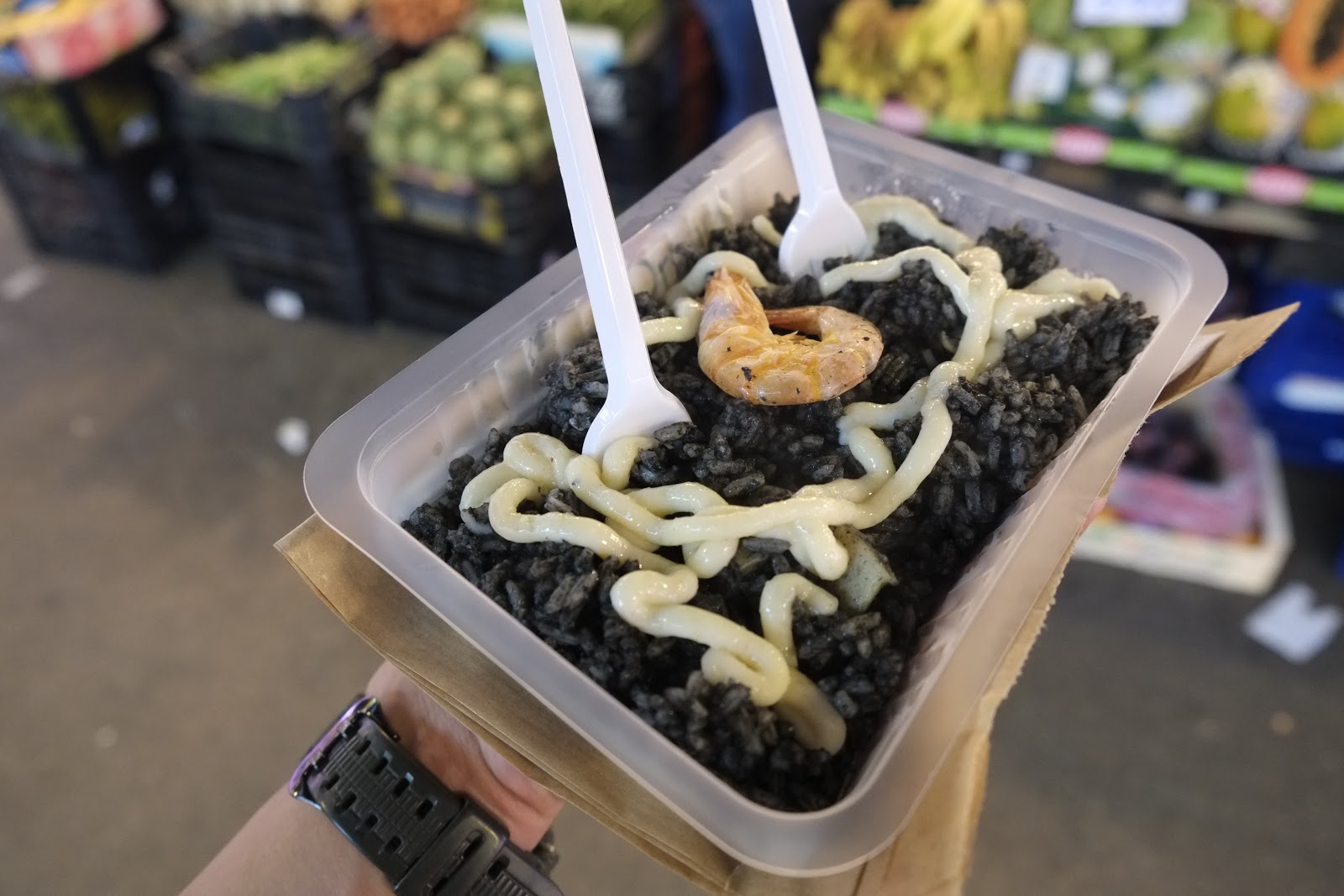


And finally, yes there's the black squid ink. They seem awfully proud of these here. I have no clue if it actually taste anything, or if they simply add it for the colour for added shock value. One common usage is the black squid ink croquette (potato filled fried dumplings). But my favourite is the garlic black squid ink Paella. You can either order a fresh pan of it for yourself (about 14 Euros), or if you are at the market, simply get a serving-size portion for about 6 Euros from one of the already-made giant pans. I swear it will make you fall in love wth black.

Finally, to drink. Well the two consistent choices here are Cava and Vermouth (Vermut). Of course, wine are plenty, and still the most popular choice by far. Cava, as previously mentioned, seems very much alike to any dry sparking wine back home, such as Proseco or Brut. Vermouth would be more of an acquired taste. Previously known to me only as an ingredient in martini (which usually uses more a white, dry vermouth), here it's the sweeter, red version that is more usually drank, often on ice with a slice of orange and an olive. The slightly sweet, tangy, somewhat medicinal taste may surprise some people, but after a few attempts it has become my preferred choice to wash down my Tapas. A glass costs somewhere about 2-3 Euros depending on the restaurant. Traditionally drank as an appetitizer, I like mine towards the end of the meal, as a slight stomach warmer, with just enough sweetness to dampen my appetite, until I turn the next corner, with a brand new exciting Tapas bar awaiting my arrival. And it all begins again.

Catching the fight home tomorrow. Time for some last minute market scrolling. Adios from Spain. Muchas gracias para leyendo. More photos to come on Facebook, eventually.


Eating my way through San Sebastián...


San Sebastián is beautiful. I wasn't expecting much coming here today. For when I got to the bus station it was still drizzling rain, and it seemed my iPhone weather app was destined to failed me again. The rain didn't stop when it arrived. In fact, it intensified. Which gave me all the more excuse to hunt for food right from the get go.

In fact, hunting for food is pretty much the thing to do here. San Sebastián is actually known as a foodie's paradise. From what I've read, it has the highest number of Michelin stars per square meter in the world, and a total of 17 stars to boot. Two of its restaurants are listened in the top 50 in the world in such a little coastal town, and I think one within the top 10.  The old town has probably the highest concentration of Pintxos parlours anywhere, with seemingly one dig trying to out-do another, but each focusing on the one thing they seem best at. Googling for suggestions, I pretty much spent the first part of the rainy afternoon eating my way across town, trying two to three pieces from each places (or five...), and of course washing it down with either a mini serving of beer or Cava. Ganbara, the first bar I went to which had many favorable reviews, was pretty much good at every type of Pintxos that I've seen before. The next one, Bar Txepetxa (I have no idea how to say this either), loves their anchovies, and features it prominently on all their selections, together with fancy stuff like uni (sea urchin) or trout roe or black caviar... The third location, Zeruko, went somewhat insane, and took their art to the next level in esthetics. In fact their tapas look more like carefully crafted dim sum from high end restaurants back home, and often I had no idea what type of food I was selecting until I bite into them and found myself pleasantly surprised. They also grill everything, so once you order what you thought was an amazing looking piece already, they take that, stick in in the boiler, then proceeded to further plate their dish with drizzles of flavoured syrups or basil oil. Theirs were most expensive of course (3 Euros each compared to the other two at 2 Euros), but I couldn't resist and had five when I was already full other places. I wanted more, but I did exercise some self restrain.


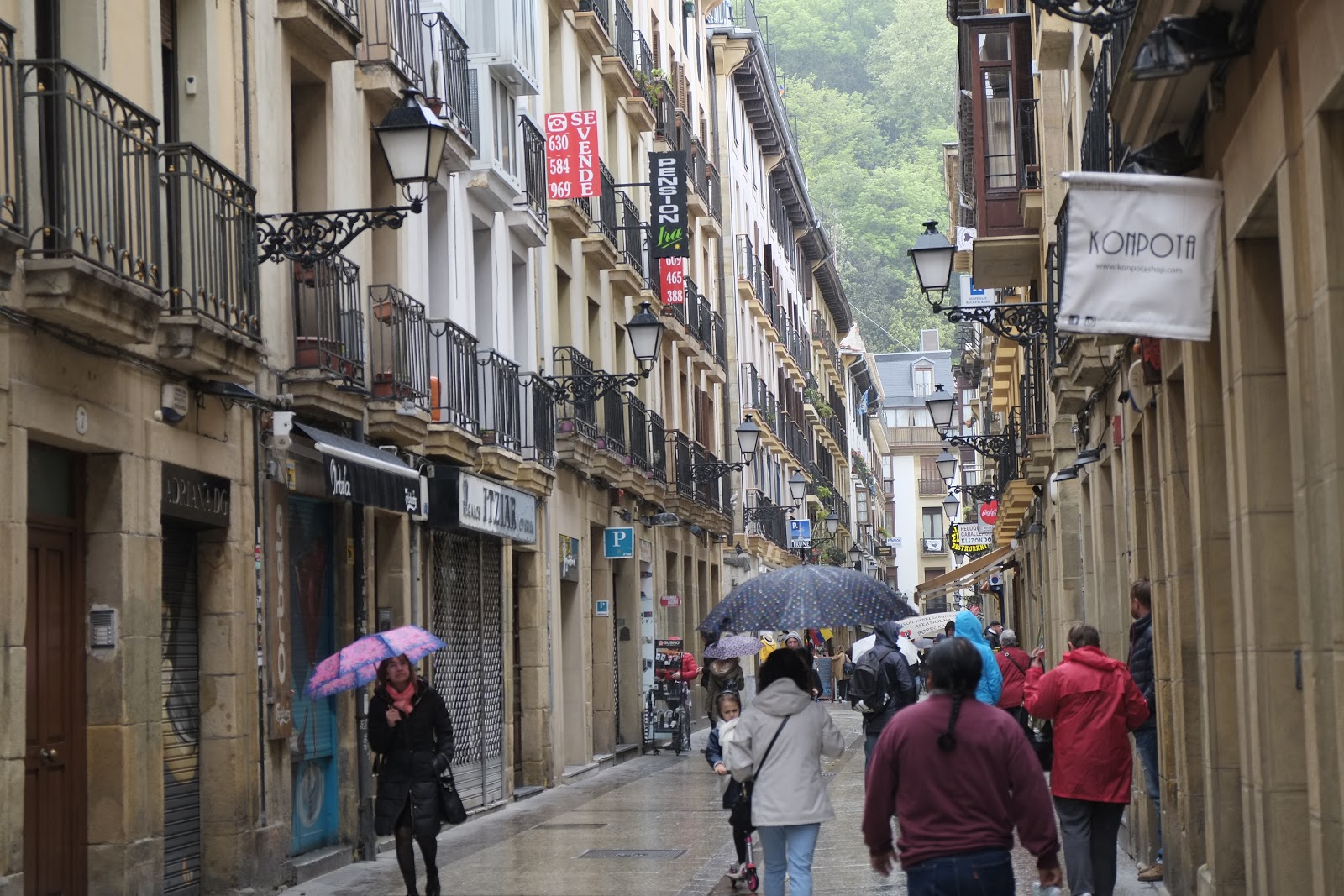
In the afternoon, the sun came out. Which means of course everybody had ice cream. And I do mean everyone. I didn't even quite wanted one, but decided I shouldn't be so against the masses that I ordered myself two scoops on a cone (Mango and Tiramisu; I know it was a poor combination). But all the food talk shouldn't take away from how beautiful San Sebastián really is, especially when the weather is great.  The buildings are amazingly rich with aging textures and details, and the streets tidy but festive. Of course, the highlight of the area is the popular La Concha beach, regarded by some as one of the most beautiful urban beaches in the world. Flank between the two overlooking hills, it is in essence of lovely little cove, allowing the harsh Atlantic waves from the Bay of Biscay to mellow out and gently roll in onto the wide patches of fine Atlantic sand. On the other side of the old town, without the protection of the natural cove, the large waves makes it also a big surfing destination for the locals. And every so often, you see fit looking men and women decked in wet suits zip around town, balancing their surf boards on their bicycles, trying to avoid the dense flocks of camera dangling tourists. After all that sight seeing, it was time to feed my tummy again, as I settled onto a sunny patio chair at one of the more popular dessert shops in town, trying to decide which one of the mini pastries I should dive into first to go with my cafe con leche. I have about two more hours to spend in this lovely town before my bus is to go back. I'll have to find some dinner. Which, I'm sure, wouldn't be much of a challenge. If you are ever in the Basque region of Spain, I suggest you come here to take a little peak of this lovely place. One day, maybe two, or a few more if you plan to surf. It'll probably rank as one of the prettier places I've ever seen in my travels.


(Coming here from Bilbao is a simple 1.5 hour bus journey away. The route is served by two carriers. ALSA seems to be the more common cheaper option (about 6 Euros each way but watch out for a few more expensive time slots. Because I chose to go on a National Holiday (Labour Day), there were less buses to choose from, and in order to get a few more hours sleep I went with the other company, PESA, at 12 Euros a piece. Buses were comfortable, modern, and at parts quite scenic. You could also take a slow train there (not part of the Renfe network), but it somehow takes longer and I think about 2.5 hours each way).


Monday, April 30, 2018

A wet day in Bilbao and a modern day Gaudi.


I've never heard of Bilbao, Spain. That is until two friends told me about it when I asked for ideas of side trips from Barcelona. (It is hardly a side trip, for it is a 6 hour train ride away...). They told me I should check out the Basque Country of Spain, which I have also never heard of. It's unique, they say. It got its own culture, its own language, its own cuisine. Apparently, it is also part of the route of the popular pilgrimage tour Camino del Norte, yet another thing I have never heard of, until this dude from the hostel interrupted my conversation with a very nice Canadian girl to tell us he's been walking this route. I guess he wanted us to be impressed by it. But I digress...

The Basque Country is indeed special as an autonomous region in Spain. In fact, there is also a French section at the southern border of France. Interestingly, both this part of Spain and the Catalonia region at Barcelona and two of the riches part of country. The Basque is likely known for its natural beauty. It has stunning costal cliff sides and rolling mountains. I will likely see none of this, for I picked the two rainiest days of my trip to spend here somehow. But the Basque is also known for it's amazing cuisine, something that the rain cannot deter me from. In fact, those Pintxos that I mentioned before are essentially the Basque's versions of the Spanish Tapa. More on this later, however, as there'll likely be an entire blog just on food. But today, it was sight seeing in the rain.


Bilbao is the largest city of the Basque region. By large I mean it is really just quite small. I took me probably around just an hour to walk it. It is totally doable in a day. In fact, any extra days here should be used to explore the nearby region. Like San Sebastián, about an hour away by bus, which I am going tomorrow. Or the stunning seaside cliff point San Juan de Gaztelugatxe, which I sadly will have to miss, but sits only about an our away by car if the weather were to be favourable enough for me to consider renting a car and going. It is also a popular wine region. And, if it serves your palette, historically also makes this sour cloudy natural cider (Sidra Naural) that I am drinking now. It's not the sweet cider that I'm fond of. As I offered it to others around the hostel, we all agreed, "it's different".


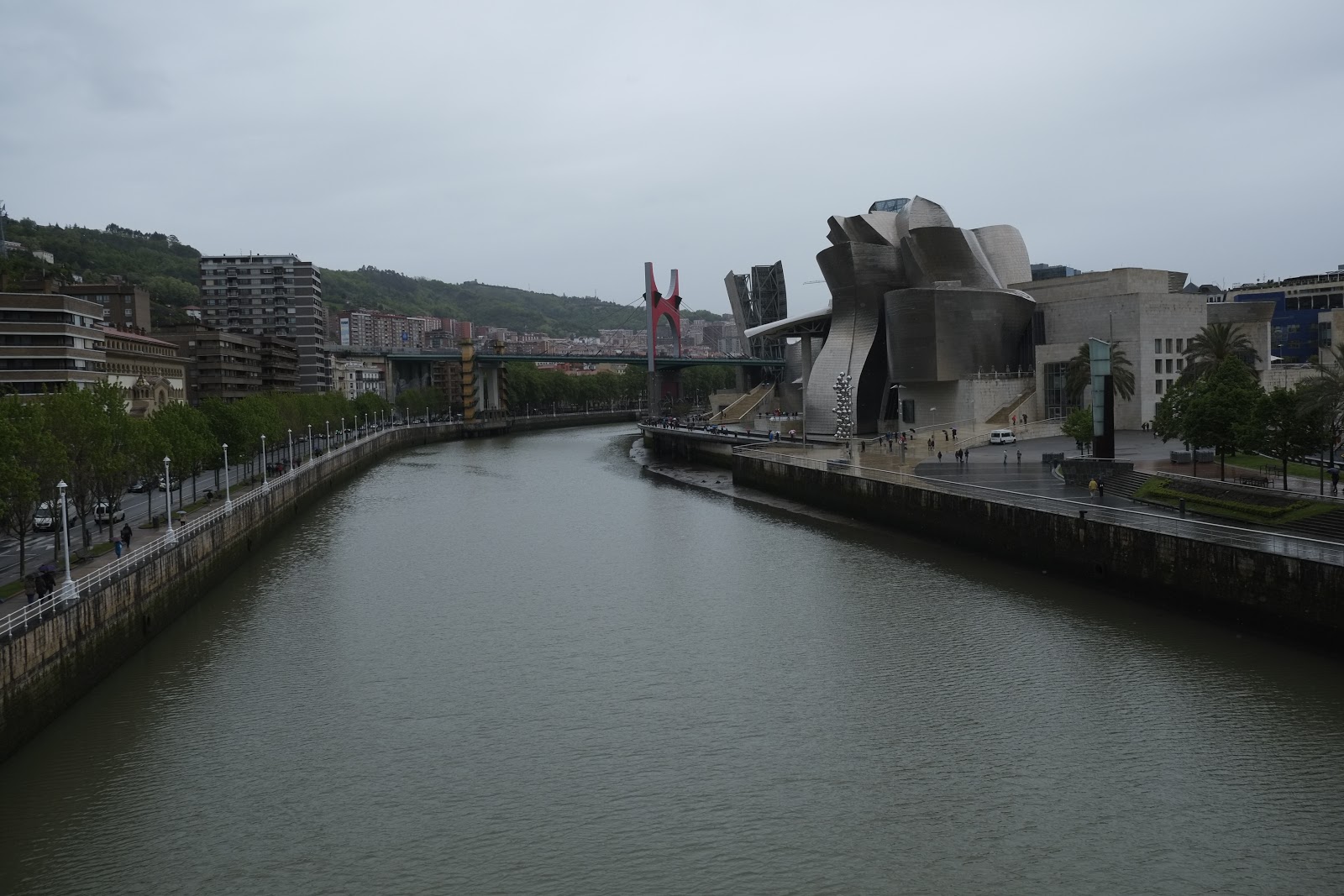
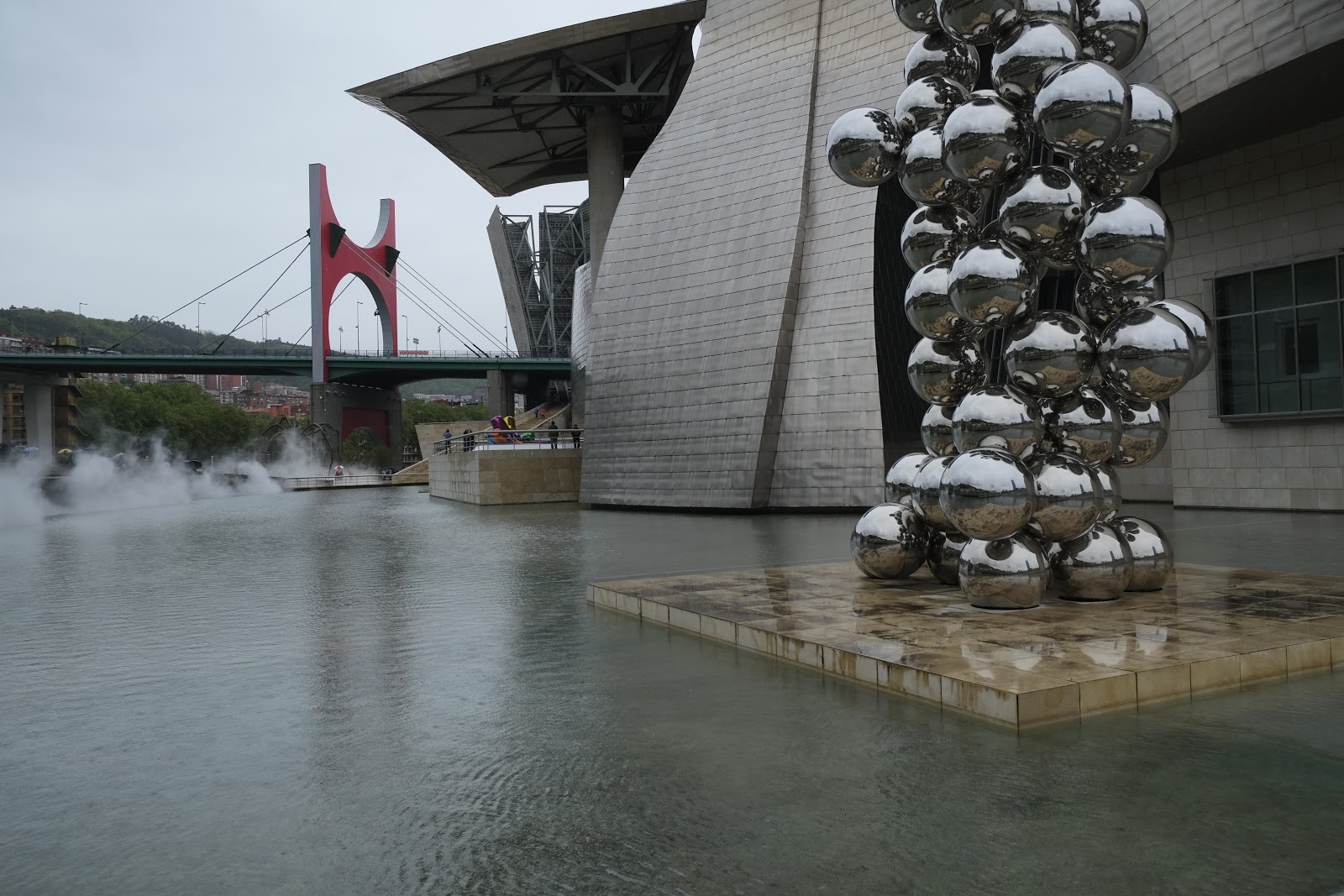
But perhaps what Bilbao is most known for, is the Guggenheim Museum Bilbao. Deigned by CANADIAN (sorry, did I cap locked that? My bad...) Frank Gehry and completed in 1997, it is a stunning, in your face piece of architecture likely not unlike the impact Gaudi had back in his days. In fact, I think I see amazing similarities in the two geniuses (their devoted followers would likely barf at this remark, but I don't know any better...). Large curvy panels of titanium fish scales forming soft lines, blending in with effective use of window walls and limestone, this building seems more symbolic of a Gehry design than any others. In fact, I think he went on and designed many similar looking buildings after this one. Many felt that the Guggenheim Museum in Bilbao had a lasting effect on the way a creatively designed iconic building can jumpstart the revitalization of a neighbourhood. In fact, they called this the "Bilbao Effect". Interestingly, this is one museum where the museum design itself was actually more interesting than its exhibits. Instead of paying the 13 Euros to see pieces of art work from artists I've never heard of, I decided to take a quick nap on one if its indoor benches. And it was wonderful.


I spent the rest of the days getting lost in the streets of Bilbao. Bilbao is a beautiful city, but of course it's buildings would come alive much better had it not been pouring. I eventually gave up on walking and tucked into a busy looking place to grab me a handful of Pintxos at 1 Euro a piece. I think I ended up trying every single one they had there, washing the down with some sweet vermouth. It as a nice quiet day in a sleepy little city, but Bilbao has its charm.


(On coming to Bilbao from Barcelona via train. Spain has a pretty good train network, and the process of getting a ticket turned out much more modern than my experience last year in Poland. The national network is run by a company called Renfe. It even has a handy app that you can download and search for train tickets. Unfortunately, my Canadian Visa card wouldn't authorize on the app, so I had to use a desktop computer to get it instead. But once purchased, like a plane ticket, you get an email version of it which is simply scanned at the station. The trains were mostly comfortable, although I got stuck in one of these "table for 4" and had to keep my legs from kicking over to the family of three sitting surrounding me. The trip took about 6 hours each way, and the stations were relatively central so most of the hostels in Bilbao should be within walking distance. And you even get to watch a Hollywood film in Spanish. :) )